







RAM Maintenance Schedule
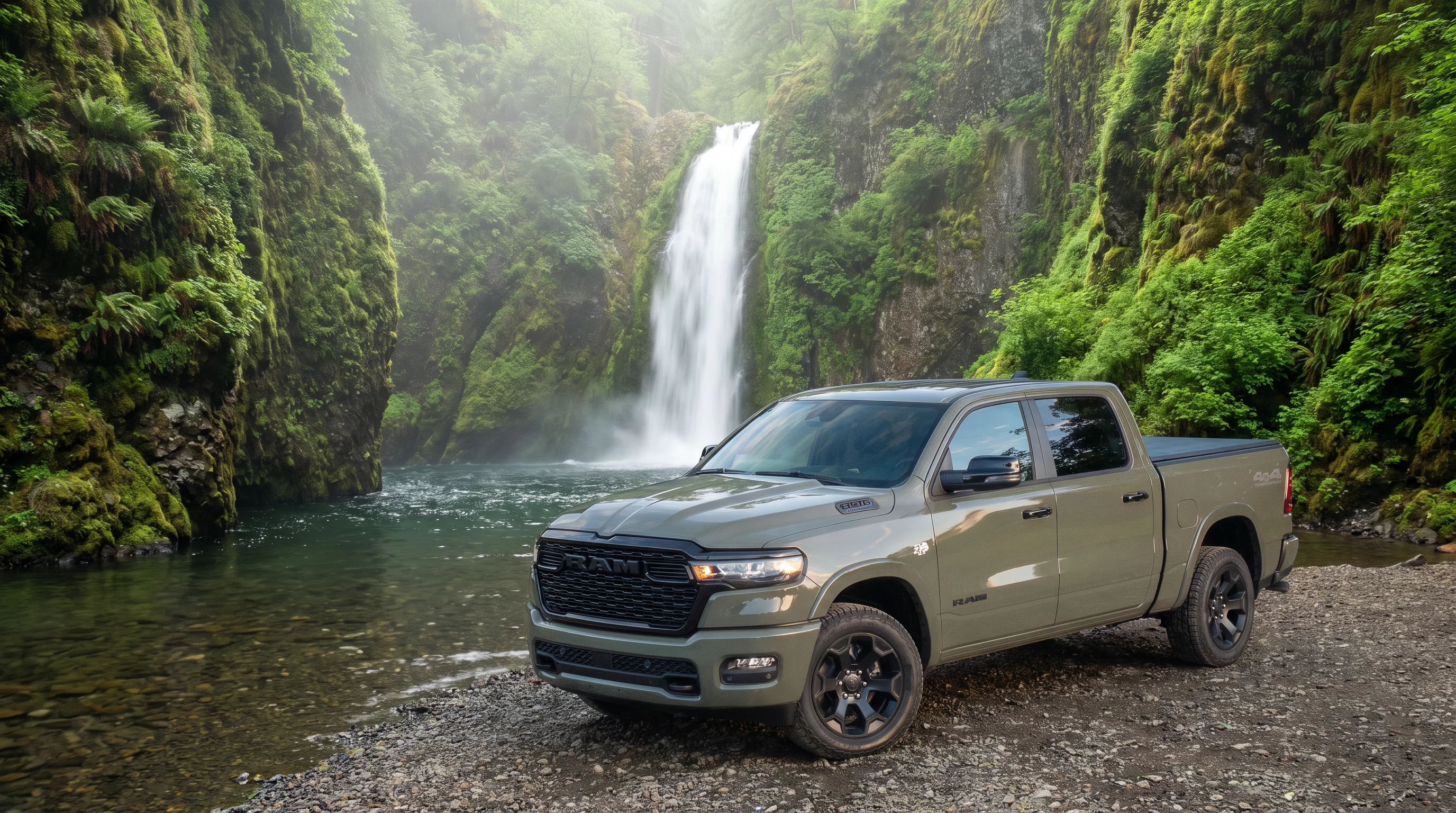
Your Ram truck is built to work hard, but the High Desert works hard on your truck. Victorville’s heat, blowing dust, and wide day-to-night temperature swings put extra demand on every system under the hood. Maybe you drive a Ram 1500 for daily commuting through Hesperia. Maybe it is a Ram 2500 hauling equipment across Apple Valley, or a Ram 3500, 4500, or 5500 Chassis Cab running commercial jobs through Adelanto. Either way, staying ahead of your maintenance schedule is the difference between planned service and an unexpected breakdown.
At Victorville Motors, our factory-trained Mopar technicians service the full Ram lineup, from the 1500 to the 5500 Chassis Cab. The intervals on this page are taken from the current Ram Owner’s Manual. Your truck’s exact schedule depends on its engine, model year, and how you actually drive it. Confirm yours against your own manual, or ask our service team to pull it up by VIN.
Where to Find Your Ram’s Official Maintenance Schedule
Your official schedule lives in three places.
| Where to Look | How to Get to It |
|---|---|
| Owner’s Manual | Open the Scheduled Maintenance section for your engine |
| Uconnect 5 touchscreen | Open the vehicle status menus on the in-dash display |
| Mopar owner portal | Sign in and add your truck by VIN, or by brand, year, and model |
If you would rather not dig, our service advisors can look up your exact schedule by VIN and tell you what is due now and what is coming. That takes your engine, trim, and driving conditions into account instead of guessing from a generic chart.
What High Desert Driving Means for Your Ram’s Schedule
Ram’s Owner’s Manual is direct about this: more frequent maintenance may be needed for vehicles in severe operating conditions, such as dusty areas and very short trip driving. For a lot of drivers out here, that is not an edge case. It is an ordinary week. Unpaved roads near Phelan and Lucerne Valley, active construction sites, and long idle hours on commercial jobs all fit that description.
Two items on the factory schedule exist specifically for this. At every oil change interval, the manual calls for inspecting the engine air cleaner if the truck is used in dusty or off-road conditions and replacing it as necessary. It also calls for inspecting and replacing the Evaporative System Fresh Air Filter as necessary. Replacement may be more frequent in extreme dusty conditions. Most generic maintenance charts skip both.
There is also a time-based limit that catches commercial operators off guard. Oil change intervals are capped at 350 hours of engine run time. The manual explains that this limit primarily applies to vehicles that accumulate significant idle time or low-speed operating hours, such as many fleet vehicles. A truck that idles through its workday can reach that ceiling long before the odometer suggests service is due.
Ram 1500 Maintenance Schedule
The intervals in this section come from the 2027 Ram 1500 Owner’s Manual.
Engine Oil and the Oil Change Indicator
Engine oil service on the Ram 1500 is driven by the automatic oil change indicator system rather than a fixed mileage. The system watches engine operating conditions and illuminates an Oil Change Required message in the instrument cluster when service is due. When that message appears, the manual asks you to have the vehicle serviced as soon as possible, within the next 500 miles.
The hard ceiling on that interval depends on which engine you have. On the 3.6L Pentastar V6 and the 5.7L HEMI V8, oil change intervals should never exceed 7,500 miles, 12 months, or 350 hours of engine run time, whichever comes first. On the 3.0L Hurricane, the limit is 10,000 miles, 12 months, or 350 hours. This is a difference worth knowing, because a single generic figure applied to the whole lineup will be wrong for someone.
What Happens at Every Oil Change
The factory schedule bundles a list of inspections into every oil change interval, not just the oil and filter:
- Change the oil and filter
- Rotate the tires at the first sign of irregular wear, even if it occurs before the indicator turns on
- Inspect the battery and clean and tighten terminals as required
- Inspect the CV and universal joints
- Inspect the brake pads, shoes, rotors, drums, and hoses
- Inspect the engine cooling system protection and hoses
- Inspect the exhaust system
- Inspect the engine air cleaner if driving in dusty or off-road conditions, and replace as necessary
- Inspect and replace the Evaporative System Fresh Air Filter as necessary
Published Mileage Intervals
| Service Item | Interval |
|---|---|
| Engine oil and filter | Per the oil change indicator. 3.6L and 5.7L: never exceed 7,500 miles, 12 months, or 350 engine hours. 3.0L: never exceed 10,000 miles, 12 months, or 350 engine hours |
| Tire rotation | At every oil change, and at each 10,000-mile interval |
| CV and universal joints | Inspect at every oil change, and at each 10,000-mile interval |
| Brake pads | Inspect at every oil change; full inspection every 20,000 miles |
| Front suspension, tie rod ends and boot seals | Inspect every 20,000 miles |
| Cabin air filter | Every 12,000 miles |
| Engine air cleaner filter | Replace every 30,000 miles; inspect at every oil change if driven in dusty or off-road conditions |
| Evaporative System Fresh Air Filter | Inspect and replace as necessary at every oil change; more frequent in extreme dusty conditions |
| Front and rear axle surfaces | Inspect every 30,000 miles; change axle fluid for police, taxi, fleet, off-road, or frequent trailer towing |
| Transfer case fluid | Inspect every 30,000 miles for heavy usage, off-road, or fleet and taxi use; change at 120,000 miles |
| Brake fluid | Every 2 years. Time-based only; mileage intervals do not apply |
| Engine coolant | 10 years or 150,000 miles, whichever comes first |
| Accessory drive belt | Replace at 150,000 miles |
The information in this article is general guidance and does not constitute a specific diagnostic or repair recommendation for any individual vehicle. Repair and maintenance decisions should be made in consultation with a certified technician based on the specific condition of your vehicle.
Spark Plug Intervals by Engine
Spark plug intervals are not the same across the Ram 1500 engine lineup, and this is where generic maintenance charts most often go wrong. Ram publishes a different interval for each engine, and the spark plug interval is mileage-based only, so the yearly intervals do not apply.
| Engine | Spark Plug Replacement |
|---|---|
| 3.0L Hurricane and High-Output 3.0L Hurricane | 60,000 and 120,000 miles |
| 3.6L Pentastar V6 with eTorque | 100,000 miles |
| 5.7L HEMI V8 | 100,000 miles |
The information in this article is general guidance and does not constitute a specific diagnostic or repair recommendation for any individual vehicle. Repair and maintenance decisions should be made in consultation with a certified technician based on the specific condition of your vehicle.
Bear Valley Road is a major divided arterial carrying roughly 56,000 vehicles a day, about five percent of them trucks, with approaches running through Hesperia and Victorville. If that is your daily commute, rotate on schedule. Have the front suspension, tie rod ends, and boot seals inspected at every 20,000-mile interval rather than waiting for a pull or a vibration. For correct cold pressures by configuration, see our RAM tire pressure guide.
If you are due for an oil service specifically, our RAM oil change near Hesperia page covers what the service includes and how to book it.
Ram 2500, 3500 and Chassis Cab Diesel Maintenance Schedule
Ram heavy duty trucks running the 6.7L Cummins Turbo Diesel inline-six follow their own plan, published in the Ram 2500/3500 Owner’s Manual. The fuel filter service is the item owners most often get wrong.
| Service Item | Interval |
|---|---|
| Engine oil and filter | Every 15,000 miles, 12 months, or 500 hours, or sooner if prompted by the oil change indicator |
| Front engine fuel filter | Every 15,000 miles |
| Rear engine fuel filter | Every 15,000 miles |
| Engine air cleaner filter | Inspect every 15,000 miles; never exceed 30,000 miles or 24 months |
| Cabin air filter | Every 12,000 miles |
| Diesel Exhaust Fluid (DEF) tank | Check and refill as needed every 7,500 miles |
| Tire rotation | Every 7,500 miles |
| CV and universal joints | Inspect every 7,500 miles |
| Front and rear axle surfaces | Inspect every 22,500 miles; change axle fluid for police, taxi, fleet, off-road, or frequent trailer towing |
| Transfer case fluid (4×4) | Inspect every 30,000 miles; change at 60,000 and 120,000 miles |
| Automatic transmission fluid | Change at 60,000 and 120,000 miles |
The information in this article is general guidance and does not constitute a specific diagnostic or repair recommendation for any individual vehicle. Repair and maintenance decisions should be made in consultation with a certified technician based on the specific condition of your vehicle.
The two fuel filters are the part worth understanding. Your truck has two engine-mounted fuel filter assemblies, a front and a rear, and the manual schedules both for replacement at the same 15,000-mile interval. Owners sometimes ask whether changing just one is acceptable. It is not the published service. Modern high-pressure common-rail fuel systems run at extreme pressure. Water, sediment, or fine dirt getting past an aged filter can damage injectors and the high-pressure fuel pump. That repair costs far more than a pair of filters.
If your heavy duty runs the 6.4L HEMI V8 instead, the manual caps oil changes at 8,000 miles, 12 months, or 350 hours of engine run time, whichever comes first.
For oil capacities and the correct oil grade across heavy duty model years, see our RAM heavy duty oil type and capacity guide.
Brake Fluid and Driver-Assist Sensor Care
Brake Fluid Is on a Clock, Not an Odometer
Brake fluid on the Ram 1500 is replaced every two years. This one surprises people: the manual states that the brake fluid change interval is time-based only, and that mileage intervals do not apply. A truck that has covered 6,000 miles in two years is just as due as one that has covered 60,000.
The reason is chemistry rather than wear. Brake fluid is hygroscopic, meaning it absorbs moisture from the air over time even in a dry climate. Moisture lowers the fluid’s boiling point. That can produce a soft pedal or reduced stopping performance on a long grade or under a heavy payload. It also corrodes anti-lock pump valves and calipers from the inside.
Keeping Driver-Assist Sensors Clean
Your Ram’s driver-assistance hardware needs attention too, and in the High Desert it is mostly a cleanliness problem. Ram 1500 trucks carry an Active Lane Management System, Adaptive Cruise Control with Stop and Go, Blind-Spot and Cross-Path Detection, ParkSense Front and Rear Park-Assist, and a Surround-View Camera System, all documented in the owner’s manual. Every one of them depends on a clear lens or an unobstructed radar face.
Windshield Camera Zone
Keep the upper center glass clear of bugs, dust, and chips.
Front Bumper Radar
Clear mud and desert grime from the lower fascia.
Rear Bumper Sensors
Wipe clean after off-road travel.
Keeping these surfaces clean prevents system fault messages and keeps the safety software working as designed. Traffic Sign Recognition is available on some equipment groups rather than standard across the lineup, so check your own window sticker before assuming your truck has it.
Driver-assistance and advanced safety systems are supplemental aids and are not substitutes for safe and attentive driving. Availability, operation, and effectiveness vary by trim and equipment and depend on factors including road, weather, traffic, and vehicle condition. Always keep your hands on the wheel and your eyes on the road. See your owner’s manual for system limitations and details.
Ram Commercial Truck Maintenance
Victorville Motors is a BusinessLink dealer. Our commercial division services the full Ram commercial lineup, including the Ram 3500, 4500, and 5500 Chassis Cab models that work construction sites, haul equipment, and support businesses throughout the High Desert. BusinessLink members receive dealership perks including expedited service, complimentary shuttles, loaner vehicles, and access to our trusted network of upfitters.
Commercial Ram trucks under heavy-duty use need closer attention to several systems. Brake components wear faster under load. Suspension and steering endure more stress. Diesel models carry the fuel filter, DEF, and Cummins-specific intervals above. Transfer case and transmission fluid come due at 60,000 and 120,000 miles. Axle fluid is different: the manual calls for a change based on how the truck is used, not on mileage alone. Police, taxi, fleet, off-road, and frequent trailer towing all qualify.
To reach our commercial division directly, call (760) 493-6700.
Why Service Your Ram at Victorville Motors
Whether you drive a Ram 1500 pickup or a 5500 Chassis Cab, our service team keeps your truck running in the High Desert. Our factory-trained Mopar technicians use genuine parts and manufacturer-approved procedures on every service. We can also pull your truck’s exact published schedule by VIN, so you are servicing what Ram actually calls for rather than a generic chart.
Common Questions About Ram Maintenance
How does the oil change indicator system work on a Ram truck?
Your Ram is equipped with an automatic oil change indicator system that monitors engine operating conditions and reminds you when scheduled maintenance is due, rather than counting down a fixed mileage. The instrument cluster displays an Oil Change Required message, and the manual asks you to have the vehicle serviced as soon as possible, within the next 500 miles. The ceiling depends on your engine: on the 3.6L Pentastar V6 and 5.7L HEMI V8, intervals should never exceed 7,500 miles, 12 months, or 350 hours of engine run time, while the 3.0L Hurricane allows up to 10,000 miles, 12 months, or 350 hours.
The information in this article is general guidance and does not constitute a specific diagnostic or repair recommendation for any individual vehicle. Repair and maintenance decisions should be made in consultation with a certified technician based on the specific condition of your vehicle.
What happens if I delay changing the fuel filters on my Cummins diesel?
Delaying fuel filter service lets dirt, water, and contaminants reach the high-pressure fuel injection system. Over time that causes clogged injectors, sluggish throttle response, reduced fuel economy, and potential fuel pump failure. Replacing both the front and rear engine fuel filters at the scheduled 15,000-mile interval prevents premature component damage and a much more expensive repair.
The information in this article is general guidance and does not constitute a specific diagnostic or repair recommendation for any individual vehicle. Repair and maintenance decisions should be made in consultation with a certified technician based on the specific condition of your vehicle.
When should transfer case and axle fluids be changed on a 4×4 Ram?
On the Ram 1500, the transfer case fluid is inspected every 30,000 miles for heavy usage, off-road, or fleet and taxi use, and changed at 120,000 miles. Axle surfaces are inspected on the same 30,000-mile schedule, with the axle fluid changed if the truck is used for police, taxi, fleet, off-road, or frequent trailer towing. On heavy duty 4×4 models, the transfer case fluid and the automatic transmission fluid are both changed at 60,000 and 120,000 miles, with axle surfaces inspected every 22,500 miles.
The information in this article is general guidance and does not constitute a specific diagnostic or repair recommendation for any individual vehicle. Repair and maintenance decisions should be made in consultation with a certified technician based on the specific condition of your vehicle.
Where can I get genuine Mopar parts for my Ram?
You can source genuine Mopar engine oil, air filters, fuel filters, and brake components through our parts department. Using original equipment parts ensures proper fitment and keeps your service consistent with what Ram specifies for your truck.
Disclaimers
The information in this article is general guidance and does not constitute a specific diagnostic or repair recommendation for any individual vehicle. Repair and maintenance decisions should be made in consultation with a certified technician based on the specific condition of your vehicle.
Driver-assistance and advanced safety systems are supplemental aids and are not substitutes for safe and attentive driving. Availability, operation, and effectiveness vary by trim and equipment and depend on factors including road, weather, traffic, and vehicle condition. Always keep your hands on the wheel and your eyes on the road. See your owner’s manual for system limitations and details.