







Ram Heavy Duty Oil Type & Capacity Guide (2010–2026): 6.7L Cummins, 6.4L HEMI & 5.7L HEMI
Choosing the right engine oil for a Ram 2500 or 3500 isn’t a one-size-fits-all decision. Across the 2010–2026 model years, Ram Heavy Duty trucks have used three distinct engines — the 6.7L Cummins Turbo Diesel, the 6.4L HEMI V8, and the earlier 5.7L HEMI V8 — and each has its own oil capacity, viscosity, and specification that has shifted over time. Using the correct oil matters even more here in the High Desert, where Victorville-area summer heat, dust, and towing grades like the Cajon Pass put real thermal stress on an engine. This guide lays out the verified specs for every Ram HD engine of the era, starting with a quick at-a-glance table.
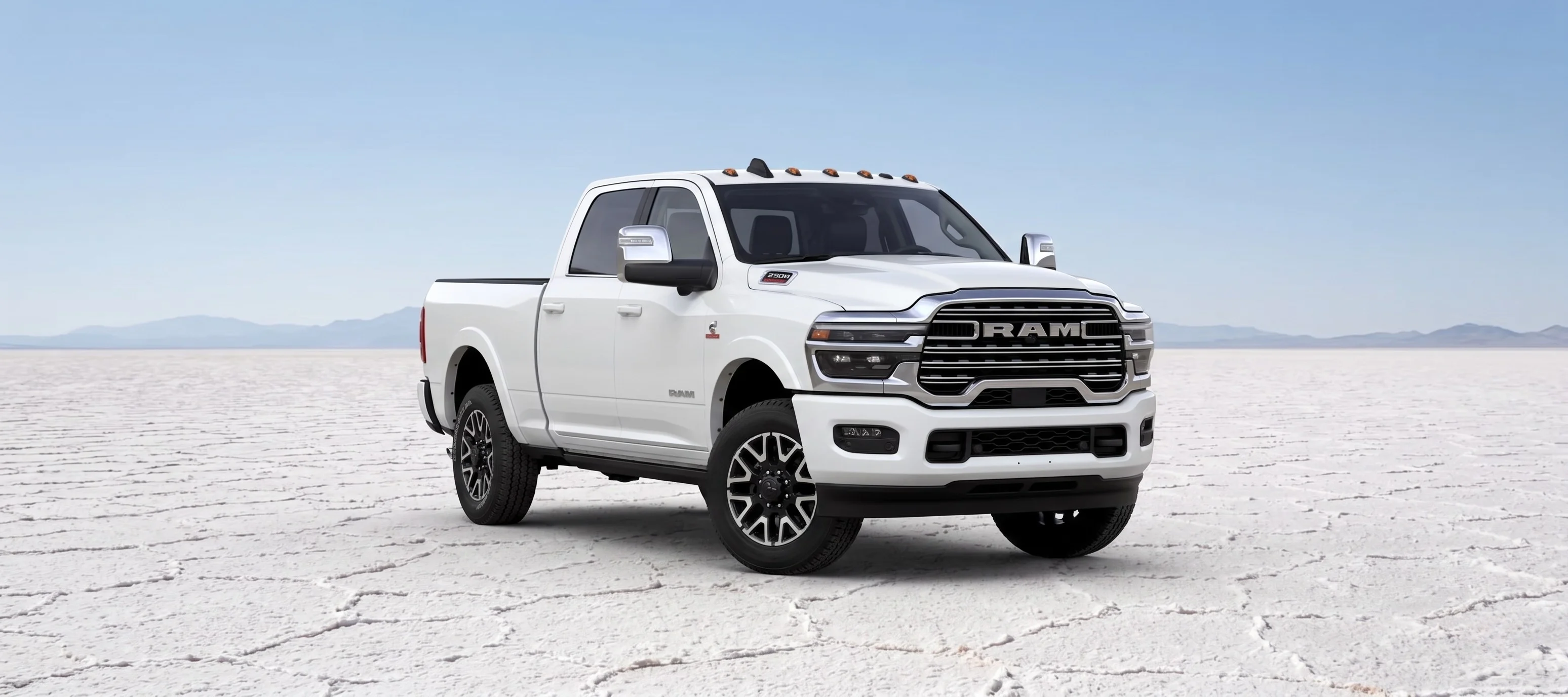
Ram Heavy Duty Oil Specs at a Glance (2010–2026)
| Engine | Model Years | Oil Type (Viscosity + Spec) | Capacity (with filter) |
|---|---|---|---|
| 6.7L Cummins Turbo Diesel I6 | 2010–2018 | 15W-40 (warm) or 5W-40 (cold), low-ash; API CJ-4/CK-4, Cummins CES 20081 | 12 qts (11.4 L) |
| 6.7L Cummins Turbo Diesel I6 | 2019–2026 | 10W-30 (above 0°F) or 5W-40, low-ash; API CK-4, Cummins CES 20081/20086, Chrysler MS-10902 | 12 qts (11.4 L) |
| 6.4L HEMI V8 (“BGE”) | 2014–2021 | 0W-40 full synthetic; Chrysler MS-12633 | 7 qts (6.6 L) |
| 6.4L HEMI V8 (“BGE”) | 2022–2026 | 0W-40 full synthetic; Chrysler MS-A0921 | 7 qts (6.6 L) |
| 5.7L HEMI V8 | 2010–2013 | 5W-30 full synthetic (HD spec, GCWR over 14,000 lbs); Chrysler MS-6395 | 7 qts (6.6 L) |
All capacities include a new oil filter. Always confirm against your specific truck’s owner’s manual and oil fill cap.
6.7L Cummins Turbo Diesel: Capacity and the 2019 Viscosity Change
The 6.7L Cummins Turbo Diesel has been the diesel workhorse of the Ram 2500 and 3500 throughout the 2010–2026 run, and its oil capacity has stayed constant: 12 quarts (11.4 liters) including a new filter. What changed is the viscosity recommendation. Trucks from 2010 through 2018 were specified for 15W-40 in warm climates or 5W-40 in cold conditions. With the 2019 redesign, which introduced hydraulic lifters, Cummins removed 15W-40 from the approved list — 2019 and newer diesels should run 10W-30 (above 0°F) or 5W-40.
Whatever the year, the chemistry is non-negotiable: the oil must be a low-ash diesel formulation meeting API CK-4 (the current heavy-duty diesel category, backward-compatible with older CJ-4 trucks) and Cummins CES 20081 — with CES 20086 also acceptable on newer trucks. Low-ash is what keeps the Diesel Particulate Filter (DPF) from clogging prematurely during regen cycles. The correct diesel oil filter is the genuine Mopar MO-285 (part 05083285AA), which fits Ram 6.7L Cummins trucks across this entire era, or a Fleetguard equivalent.
The High Desert factors in here. Sustained towing in summer heat, frequent idling at job sites, and dusty conditions all qualify as “severe duty” — which affects how often you change the oil, covered below.
6.4L HEMI V8: Why 0W-40 Is Non-Negotiable
The 6.4L HEMI V8 — Ram’s “Big Gas Engine,” or BGE — joined the Heavy Duty lineup as an option for the 2014 model year and became the sole gasoline engine starting with the 2019 redesign. It holds 7 quarts (6.6 liters) with a filter change, a figure that has held steady from 2014 through 2026.
The viscosity requirement is where owners get tripped up: the 6.4L HEMI requires 0W-40 full synthetic, year-round, in any climate. This is not the lighter 5W-20 or 0W-20 used in half-ton Ram 1500 trucks, and substituting a thinner oil is a frequent and damaging mistake — it can contribute to camshaft and lifter wear, problems this engine is sensitive to. The 0W-40 also supports the Multi-Displacement System (MDS), which deactivates four cylinders under light load to save fuel and depends on proper oil film strength to transition smoothly. The oil quality standard is Chrysler MS-12633 on 2014–2021 trucks and MS-A0921 on 2022 and newer. Note the 6.4L HEMI is naturally aspirated — there’s no turbocharger on this engine, so turbo-related oil concerns apply only to the diesel.
5.7L HEMI V8 (2010–2013): The HD-Specific 5W-30 Spec
Before the 6.4L arrived, the 5.7L HEMI V8 was the base gas engine on the 2010–2013 Ram 2500 and 3500. Its capacity matches the larger HEMI at 7 quarts (6.6 liters) with a filter, but there’s a critical viscosity distinction for Heavy Duty trucks: where the 5.7L in a half-ton Ram 1500 uses 5W-20, the Mopar manual specifies 5W-30 full synthetic for 2500/3500 models with a Gross Combined Weight Rating over 14,000 pounds. The heavier viscosity provides a thicker protective film for the bearings under the higher thermal and mechanical loads of HD hauling. The applicable oil quality standard is Chrysler MS-6395. If you own one of these earlier trucks, don’t default to the half-ton spec sheet — the HD requirement is different.
Oil Change Intervals for Ram Heavy Duty Trucks
Ram HD trucks use an onboard Oil Change Indicator System that calculates remaining oil life from engine temperature, idle time, and driving habits. The right approach is to change the oil when the indicator calls for it, while respecting the maximum limits.
For the 6.7L Cummins diesel, the maximum interval is 15,000 miles or 12 months, whichever comes first — but that’s a best-case figure for light, highway-friendly use. Heavy towing, extended idling at job sites, or operating in desert heat and dust will trigger the indicator considerably sooner, often in the 7,500–10,000 mile range. The 6.4L HEMI gas engine follows a shorter cycle, with the factory interval around 8,000 miles and the indicator dropping lower under severe-duty conditions. Many High Desert owners who tow or run in dusty conditions choose to change oil and rotate tires around every 5,000 miles as a proactive measure.
A few related maintenance notes worth knowing: the diesel’s fuel filters are typically replaced around every 30,000 miles, though some owners replace them every other oil change for added protection. Every oil service is also a good opportunity to inspect brakes, check the cooling system, and verify the dual-battery system on diesel models.
For a full breakdown of recommended intervals by mileage, see our Ram Maintenance Schedule, and to keep your truck rolling efficiently, review our Ram Tire Pressure Guide.
Synthetic Oil and Heavy-Duty Longevity
For trucks working this hard, full synthetic oil earns its premium. Synthetic provides superior thermal stability — it resists thinning when a 6.7L High-Output Cummins (rated at 430 hp and a best-in-class 1,075 lb-ft of torque on 2025–2026 trucks) is working at peak to pull a heavy trailer up a grade, which keeps the turbocharger bearings protected even when exhaust temperatures are high. For the 6.4L and the older 5.7L HEMI, synthetic isn’t just an upgrade — it’s the specified requirement. The more uniform synthetic molecules reduce internal friction, help the engine run slightly cooler, and resist the sludge and varnish buildup that shortens engine life. Under the severe-duty cycles common in the High Desert, that protection is well worth the cost per quart.
It’s also worth noting that 2026 Ram Heavy Duty trucks carry a 10-year/100,000-mile limited powertrain warranty for the original owner (up from the prior 5-year/60,000-mile coverage) — and keeping that coverage valid depends on performing scheduled maintenance, including oil changes, on time and with the correct specification oil.
DIY vs. Professional Service
Deciding between a DIY oil change and professional service comes down to weighing materials cost against expertise and documentation. A DIY diesel change means sourcing 12 quarts of specialized low-ash diesel oil and a high-capacity filter, plus handling the disposal of roughly three gallons of used oil. Our Mopar parts department can supply the exact filters and fluids to keep your warranty intact if you prefer the hands-on route.
The advantage of professional service goes beyond swapping fluid. Our factory-trained technicians perform a multi-point inspection — checking for software updates, inspecting suspension components, and verifying the diesel dual-battery system — and have the tools to reset the Oil Life Monitor correctly. A common DIY diesel mistake is over-tightening the filter or failing to lubricate the gasket, which leads to leaks that are tough to manage on an engine this size. Professional service also documents the work, which supports resale value down the road.
Frequently Asked Questions
What oil capacity and type does the 6.7L Cummins Turbo Diesel use?
The 6.7L Cummins holds 12 quarts (11.4 liters) including the filter, across all model years from 2010 through 2026. Use a low-ash diesel oil meeting API CK-4 and Cummins CES 20081. For 2010–2018 trucks that means 15W-40 (warm) or 5W-40 (cold); for 2019 and newer, use 10W-30 (above 0°F) or 5W-40.
Can I use 5W-20 or 5W-30 in the 6.4L HEMI?
No. The 6.4L HEMI requires 0W-40 full synthetic year-round. The lighter viscosities used in half-ton Ram 1500 trucks are not authorized and can contribute to camshaft and lifter wear. The 0W-40 also keeps the Multi-Displacement System operating correctly.
Is the 5.7L HEMI in an older Ram 2500 the same spec as a Ram 1500?
No — that’s a common error. The 2010–2013 Ram 2500/3500 with the 5.7L HEMI (GCWR over 14,000 lbs) specifies 5W-30 full synthetic, not the 5W-20 used in the half-ton 1500. Capacity is 7 quarts with a filter.
How often should I change the oil in my Ram Heavy Duty?
Follow the onboard Oil Change Indicator and never exceed 15,000 miles or 12 months on the diesel. If you tow heavily, idle often, or run in desert heat and dust, expect the indicator to call for service sooner — often around 7,500–10,000 miles for the diesel, and lower for the 6.4L HEMI under severe duty.
How often do the diesel fuel filters need replacing?
The 6.7L Cummins fuel filters are typically replaced around every 30,000 miles, though many owners change them every other oil change to keep the fuel system clean.
If you have questions about your specific truck or want it handled professionally, call our service team at (760) 493-7902 or stop by our Victorville service center to speak with a heavy-duty specialist.
Oil specifications, capacities, and intervals are provided as general guidance and may vary by specific model year, configuration, and operating conditions. Always confirm the correct oil type, viscosity, capacity, and service interval against your vehicle’s owner’s manual and oil fill cap before servicing. Manufacturer specifications are subject to change.
Pricing, parts availability, and service offerings are subject to change and may vary. Warranty terms and coverage are determined by the manufacturer and subject to eligibility requirements; contact our service department for current details. Please contact Victorville Motors to confirm service details and availability before your visit.