






What the 3.0L Hurricane Engine Means for Truck and SUV Drivers in Hesperia
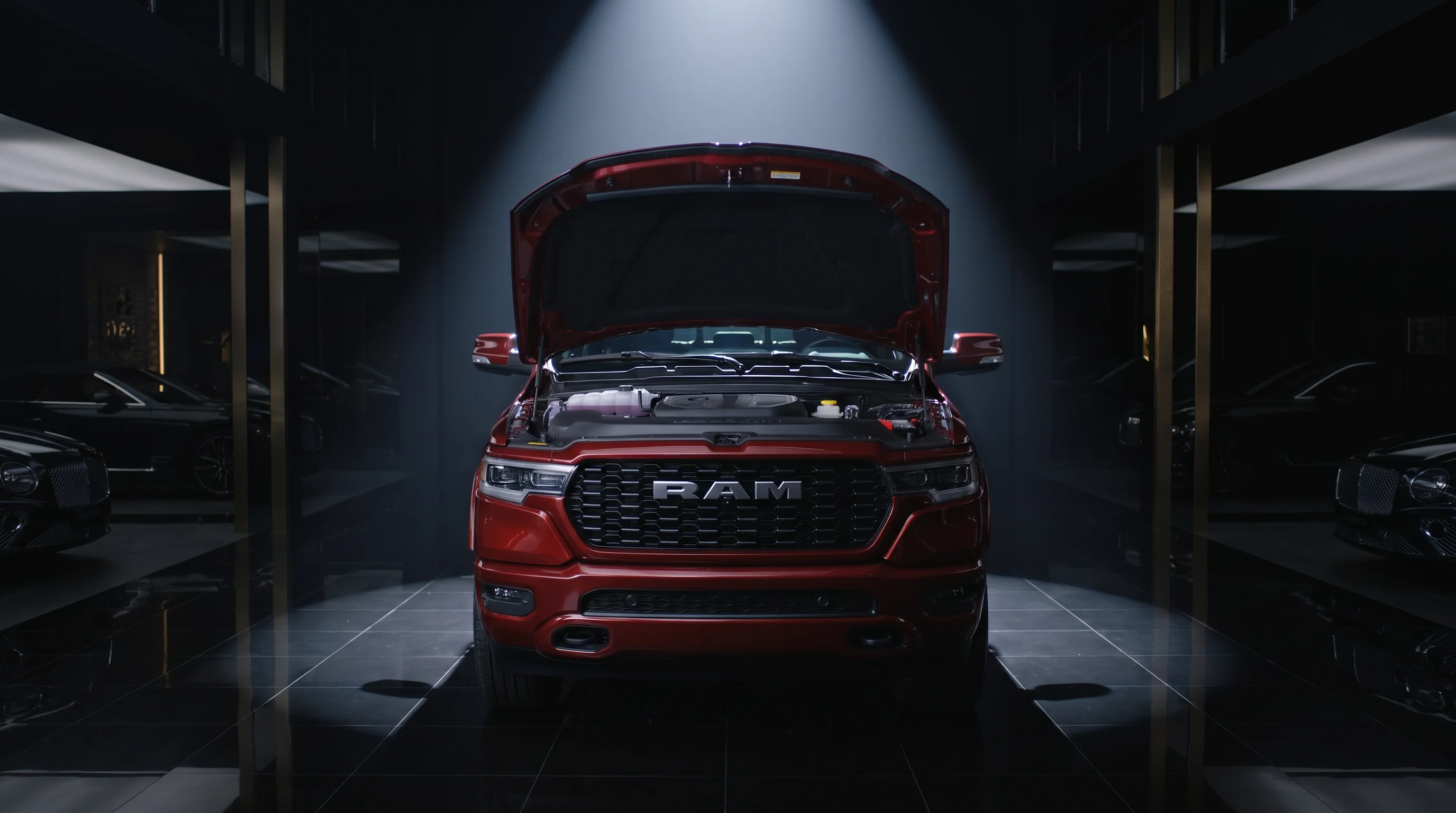
The Stellantis 3.0L Hurricane twin-turbo engine is a 3.0-liter inline-six gasoline powertrain that delivers V8-level power with improved fuel efficiency. It comes in a Standard Output rating of 420 horsepower and a High Output configuration reaching up to 550 horsepower, using dual overhead camshafts, direct fuel injection, and twin turbochargers. For drivers in Hesperia, Apple Valley, and across the Victor Valley, it is the engine behind the trucks and SUVs doing the most work.
What Is the Stellantis 3.0L Hurricane Twin-Turbo Engine?
Engineers designed this 2,993 cc inline-six for smooth operation and instant throttle response. Inline-six engines have inherent primary and secondary balance. That balance naturally reduces vibration compared with V-shaped layouts. To minimize turbo lag, the engine uses two compact, low-inertia turbochargers, and each one feeds three cylinders. Boost builds rapidly from low engine speeds. You notice it merging onto I-15 or pulling away from a stop under load.
Efficiency holds up alongside the output. In two-wheel-drive truck configurations, the Standard Output version earns an EPA-estimated 18 mpg city and 25 mpg highway, per fueleconomy.gov.
One clarification is worth making up front, because it comes up constantly: the Hurricane has not replaced the V8. Stellantis originally positioned it that way, but the 5.7L HEMI V8 returned to the 2026 Ram 1500 lineup and is now sold alongside both Hurricane variants and the 3.6L Pentastar V6, as Ram confirms on its own 1500 page. Four gasoline engines, not one.
EPA-estimated fuel economy figures are for comparison purposes only. Your actual mileage will vary depending on driving conditions, how you drive and maintain your vehicle, battery age/condition, and other factors.
What Technologies Power the Hurricane Twin-Turbo Engine?
Several engineering choices carry most of the load here. The Hurricane uses a deep-skirt cast-aluminum block, Plasma Transfer Wire Arc cylinder coatings, low-inertia turbochargers, and a 350-bar direct injection system. Together they lift thermal efficiency, cut engine weight, and do away with heavy cast-iron cylinder liners.
The cylinder coating is the standout. Most engines get iron sleeves pressed into the cylinder bores. Instead, Stellantis sprays a Plasma Transfer Wire Arc (PTWA) layer of alloy steel directly onto the aluminum walls. Per Stellantis engineering documentation, the result is a durable, ultra-low-friction surface roughly ten times more wear-resistant than a cast-iron liner. Removing the liners also cuts weight and leaves more aluminum between cylinders for better heat transfer.
Deep-Skirt Cast-Aluminum Block
A rigid structure with steel main bearing caps, capable of handling intense cylinder pressures.
Forged Steel Crankshaft and Rods
Strengthens the rotating assembly under heavy load.
Low-Inertia Twin Turbochargers
Two compact turbochargers, each feeding three cylinders, so boost builds early and turbo lag stays minimal.
Water-to-Air Charge Cooler
Cools compressed intake air before it enters the cylinders to maximize air density and power.
Dual Independent Variable Valve Timing
Adjusts intake and exhaust timing on the fly. That balance keeps economy up without giving up power.
Cooled Exhaust Gas Recirculation
A Standard Output feature that lowers combustion temperatures under load to reduce emissions and knock risk. The High Output does not use EGR.
Standard Output vs. High Output: Horsepower and Torque
The Standard Output produces 420 horsepower at 5,200 rpm and 468 to 469 lb-ft of torque depending on the vehicle. The High Output generates 540 to 550 horsepower and 521 to 531 lb-ft. Both pair with a TorqueFlite eight-speed automatic transmission across every application, including the Dodge Charger.
The Standard Output is tuned for immediate low-end torque: everyday driving, hauling, and efficient cruising, with peak torque accessible early in the rev range. That makes it the practical choice for work trucks and family vehicles.
The High Output uses modified internals to handle higher thermal and mechanical stress. That means forged aluminum pistons, dual high-pressure fuel pumps, and a lower 9.5:1 compression ratio. Peak boost varies by application. In the Dodge Charger Scat Pack it reaches 30 psi.
| Specification | Hurricane Standard Output | Hurricane High Output |
|---|---|---|
| Displacement | 3.0 liters (2,993 cc) | 3.0 liters (2,993 cc) |
| Horsepower | 420 hp @ 5,200 rpm | 540 hp – 550 hp |
| Torque | 468 lb-ft – 469 lb-ft | 521 lb-ft – 531 lb-ft |
| Compression Ratio | 10.4:1 | 9.5:1 |
| Pistons | Cast aluminum | Forged aluminum |
| Fuel Pumps | Single high-pressure | Dual high-pressure |
| Peak Boost | 22 psi | Varies by application; 30 psi in Charger Scat Pack |
| Fuel Requirement | 87 octane minimum, 91 recommended | 91 octane premium |
How Much Can a Hurricane-Powered Truck or SUV Tow?
This is where the two tunes separate, and the answer surprises people: the Standard Output tows more than the High Output.
Towing and Payload by Engine
When properly equipped, the Ram 1500 with the Standard Output Hurricane reaches up to 11,610 pounds of towing and up to 1,930 pounds of payload. That is the highest tow rating in the 2026 Ram 1500 lineup, according to Stellantis’ published 2026 Ram 1500 capability figures. The High Output makes far more power, but it is rated up to 10,000 pounds of towing and up to 1,490 pounds of payload. It is tuned for acceleration, not maximum trailer weight. On the SUV side, Jeep rates the 2026 Grand Wagoneer at up to 10,000 pounds when properly equipped.
| Vehicle and Engine | Max Towing | Max Payload |
|---|---|---|
| Ram 1500 — Hurricane Standard Output | Up to 11,610 lbs | Up to 1,930 lbs |
| Ram 1500 — Hurricane High Output | Up to 10,000 lbs | Up to 1,490 lbs |
| Jeep Grand Wagoneer — Hurricane Standard Output | Up to 10,000 lbs | Not published by Jeep |
The engine’s towing character comes from its broad torque curve. The twin turbochargers build peak torque low in the rev range. That lets the powertrain hold speed up grades without constant gear hunting. Add the available axle ratios and dedicated cooling, and you get steadier control behind travel trailers, horse trailers, and equipment rigs.
Payload matters as much as tow rating. That is true whether you are hauling toward Hesperia Lake Park or running loaded along Bear Valley Road. If you regularly run near the limit, the Standard Output is the engine to configure. It is also worth a conversation about drivetrain, since capacity varies by configuration.
Maximum towing and payload capacity figures are based on properly equipped vehicles and vary by configuration. Do not exceed any weight rating. See your owner’s manual and the vehicle’s door-jamb label for specific capacities.
Which 2026 Models Have the 3.0L Hurricane Engine?
For 2026, the Hurricane appears across three Stellantis brands. Two lineup changes are worth knowing before you shop. First, Jeep discontinued the standalone Wagoneer nameplate after the 2025 model year and folded the full-size SUV lineup into Grand Wagoneer. Second, every gas-powered 2026 Grand Wagoneer now runs the Standard Output. The High Output offered in past years is no longer on the menu.
| Brand | 2026 Model | Hurricane Variant | Output | Max Towing |
|---|---|---|---|---|
| Ram | 1500 (Tradesman, Express, Big Horn, Warlock, Laramie, Rebel, Rebel X) | Standard Output | 420 hp / 469 lb-ft | Up to 11,610 lbs |
| Ram | 1500 (RHO, Limited, Limited Longhorn, Tungsten) | High Output | 540 hp / 521 lb-ft | Up to 10,000 lbs |
| Jeep | Grand Wagoneer (Hurricane models) | Standard Output | 420 hp / 468 lb-ft | Up to 10,000 lbs |
| Dodge | Charger R/T (SIXPACK) | Standard Output | 420 hp / 468 lb-ft | Not rated for towing |
| Dodge | Charger Scat Pack (SIXPACK) | High Output | 550 hp / 531 lb-ft | Not rated for towing |
Ram 1500
On the Ram 1500, the Standard Output is standard equipment on Laramie and Rebel and comes as an upgrade on lower trims. The returning Rebel X off-road package is Standard Output only. The High Output is exclusive to RHO, Limited, Limited Longhorn, and Tungsten. Trim-by-trim availability can shift during the model year, so check current configurations in our new Ram 1500 inventory.
Dodge Charger
Dodge markets the same engine family as SIXPACK in the Charger. The R/T uses the 420-horsepower Standard Output, while the Scat Pack uses the 550-horsepower High Output, which Dodge lists as the most powerful Hurricane in production. Both are available in our new Charger inventory.
Jeep Grand Wagoneer
For full-size SUV shoppers, the Grand Wagoneer pairs the Standard Output with three rows of seating and a 10,000-pound tow rating.
What Fuel and Oil Does the 3.0L Hurricane Engine Require?
The Standard Output runs on regular 87-octane unleaded, though premium 91-octane is recommended for peak performance. For the High Output, Stellantis and Dodge specify 91-octane premium. Both variants require full synthetic motor oil meeting Stellantis material standards.
Fuel
Fuel grade matters most under load. In Standard Output engines, 87 octane covers normal daily driving. Premium lets the engine control module optimize ignition timing when you tow or drive in heat, which is most of the summer out here. For High Output engines, premium fuel guards against knock under higher boost.
Engine Oil
Oil viscosity is not interchangeable between the two tunes. The Standard Output and High Output share a block but not a lubrication specification, and the High Output calls for a heavier grade. Stellantis does not publish a single viscosity that covers both, so match the exact grade and material standard printed in your owner’s manual rather than assuming what works in one will work in the other. Our service team can confirm the correct grade for your VIN.
- Standard Output fuel: 87-octane minimum, 91-octane recommended
- High Output fuel: 91-octane premium specified
- Engine oil: Full synthetic meeting Stellantis material standards — grade differs between Standard Output and High Output; see your owner’s manual
- Warranty: Eligible 2026 Ram 1500 models carry a 10-year/100,000-mile powertrain limited warranty, available to the original retail owner only and non-transferable
The information in this article is general guidance and does not constitute a specific diagnostic or repair recommendation for any individual vehicle. Repair and maintenance decisions should be made in consultation with a certified technician based on the specific condition of your vehicle.
This information is provided for general educational purposes only and does not constitute legal advice. Warranty coverage depends on the specific terms of your vehicle’s warranty agreement. Consult your owner’s manual or a qualified legal professional for guidance on your individual situation.
Common Questions About the Stellantis 3.0L Hurricane Engine
Is the 3.0L Hurricane engine replacing the 5.7L HEMI V8?
No. Stellantis originally positioned the Hurricane as the HEMI’s replacement, but the 5.7L HEMI V8 returned to the 2026 Ram 1500 lineup and is offered alongside both Hurricane variants. The Standard Output Hurricane does produce more horsepower and torque than the HEMI while delivering better EPA-estimated fuel economy, but buyers who want the V8 can still order one.
How long is the powertrain warranty on a new Hurricane-equipped Ram 1500?
Eligible 2026 Ram 1500 models come with a 10-year/100,000-mile powertrain limited warranty covering major internal engine components, turbocharger housings, and the transmission. Coverage applies to the original retail owner only and is non-transferable; on transfer it reverts to standard powertrain terms. Fleet purchases and full battery-electric models are excluded.
What is the difference between the Standard Output and High Output Hurricane engines?
The Standard Output produces 420 horsepower and 468 to 469 lb-ft with a 10.4:1 compression ratio, cast aluminum pistons, and a single high-pressure fuel pump, optimized for regular fuel and daily utility. The High Output uses forged aluminum pistons, a lower 9.5:1 compression ratio, dual high-pressure fuel pumps, and higher boost to produce 540 to 550 horsepower and 521 to 531 lb-ft, and it requires premium fuel.
Which Hurricane engine is better for towing?
The Standard Output. In the 2026 Ram 1500 it is rated up to 11,610 pounds of towing and 1,930 pounds of payload, compared with up to 10,000 pounds and 1,490 pounds for the High Output. The High Output makes more power but is tuned for acceleration rather than maximum trailer weight.
What transmission is paired with the 3.0L Hurricane inline-six?
A TorqueFlite eight-speed automatic. Ram, Jeep, and Dodge all use it with the Hurricane. It uses adaptive shift logic to optimize gear selection for fuel economy during light cruising and to hold lower gears during heavy towing and hill climbing.
Find a Hurricane-Powered Truck or SUV at Victorville Motors
Some buyers need the 11,610-pound towing capability of the Standard Output. Others want the 540-horsepower performance of the High Output Ram 1500. Our team can walk you through the differences and match the configuration to how you actually drive.
Victorville Motors stocks new Ram trucks and Jeep SUVs with current powertrain options. We serve drivers throughout Hesperia, Apple Valley, Adelanto, Phelan, and Lucerne Valley from our showroom on Civic Drive. Our sales team can go over trim availability, show you the interior technology, and set up a test drive so you can feel the inline-six for yourself.
Call us at (760) 513-6916 or stop by to get started.
Disclaimers
EPA-estimated fuel economy figures are for comparison purposes only. Your actual mileage will vary depending on driving conditions, how you drive and maintain your vehicle, battery age/condition, and other factors.
Maximum towing and payload capacity figures are based on properly equipped vehicles and vary by configuration. Do not exceed any weight rating. See your owner’s manual and the vehicle’s door-jamb label for specific capacities.
The information in this article is general guidance and does not constitute a specific diagnostic or repair recommendation for any individual vehicle. Repair and maintenance decisions should be made in consultation with a certified technician based on the specific condition of your vehicle.
This information is provided for general educational purposes only and does not constitute legal advice. Warranty coverage depends on the specific terms of your vehicle’s warranty agreement. Consult your owner’s manual or a qualified legal professional for guidance on your individual situation.
0 comment(s) so far on What the 3.0L Hurricane Engine Means for Truck and SUV Drivers in Hesperia