







Car AC Service in Victorville: Your Summer Cooling System Guide
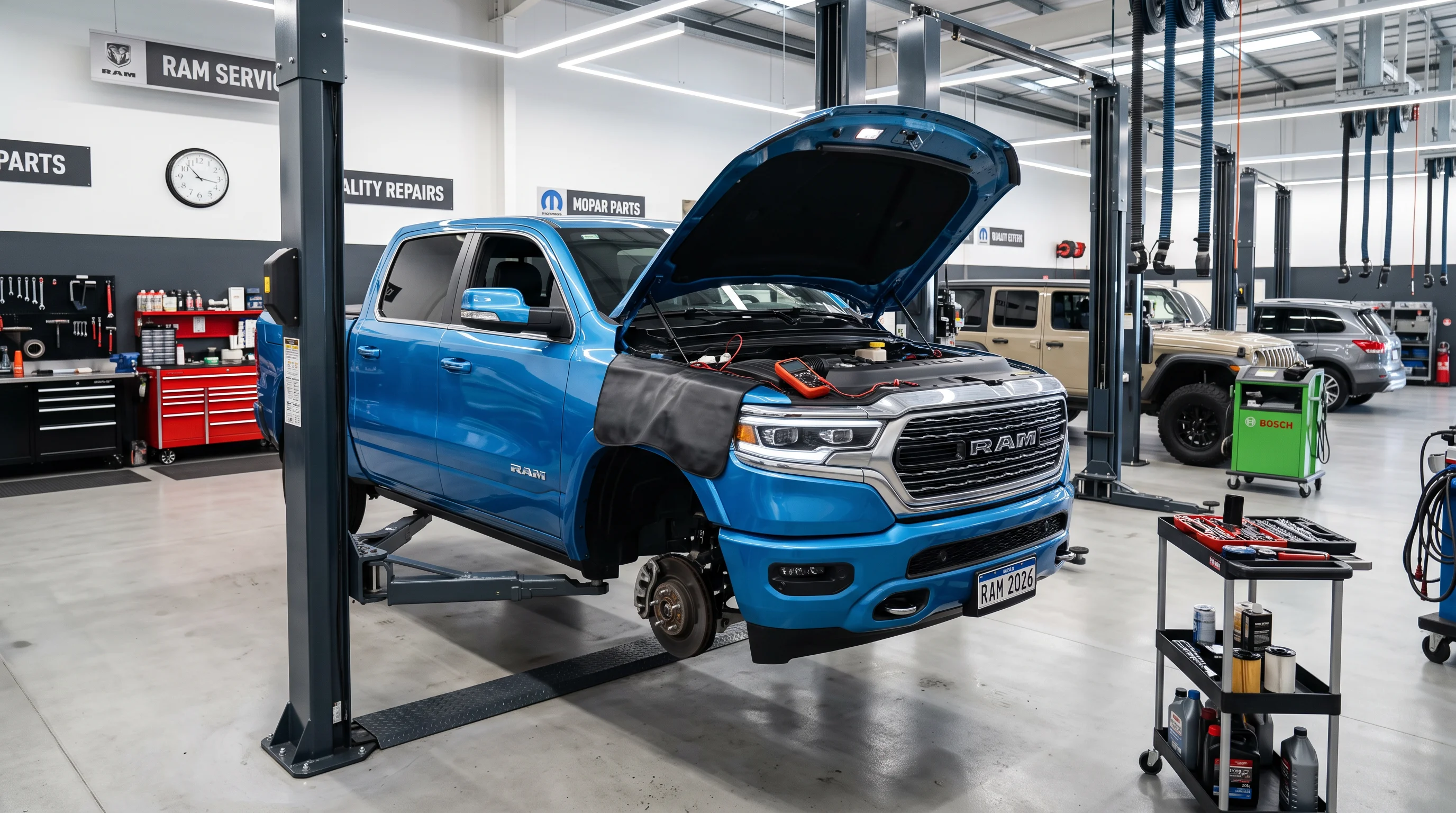
Your vehicle runs two connected cooling processes. One absorbs cabin heat using refrigerant. The other carries engine heat away using coolant.
On the air conditioning side, the compressor pressurizes refrigerant into a hot, high-pressure gas. That gas condenses into a liquid in the condenser. It then passes through an expansion valve into the evaporator, where it absorbs heat from the cabin. The blower motor pushes the now-cold air through your dash vents. Meanwhile, the radiator sheds engine heat outdoors.
How Does a Vehicle Air Conditioning and Cooling System Work?
The air conditioning loop
Automotive climate control relies on a precise thermodynamic loop. The compressor is driven by the engine’s serpentine belt through an electromagnetic clutch, and it acts as the pump that circulates pressurized refrigerant. Low-pressure gas entering the compressor is squeezed into a high-pressure, high-temperature gas. It is then routed to the condenser at the front of the vehicle, ahead of the radiator. Outside air passing across the condenser fins pulls heat out of the refrigerant and converts it into a high-pressure liquid.
That liquid moves toward the expansion valve, which meters flow into the low-pressure evaporator inside the dashboard. As pressure drops suddenly, the refrigerant boils and evaporates, rapidly chilling the aluminum fins of the evaporator core. The blower motor draws warm cabin air across those cold fins. Moisture condenses out and heat is absorbed, so the air reaching the cabin is both chilled and dehumidified.
The engine cooling loop
The engine cooling system works at the same time. A belt-driven water pump circulates glycol-based coolant through the engine block and cylinder heads. A thermostat regulates coolant temperature, opening once the engine reaches operating temperature to allow flow into the radiator. Electric radiator fans pull outside air across the cooling fins to prevent overheating during heavy loads or long idling.
What each component does
| Component | What It Does |
|---|---|
| Compressor | Belt-driven pump that squeezes low-pressure refrigerant gas into a high-pressure, high-temperature gas |
| Condenser | Sheds that heat to outside air at the front of the vehicle, turning the gas into a high-pressure liquid |
| Expansion valve | Meters liquid refrigerant into the low-pressure side, where the sudden pressure drop makes it cold |
| Evaporator | Sits in the dashboard and absorbs cabin heat as the refrigerant boils back into a gas |
| Blower motor | Pushes cabin air across the cold evaporator fins and out through the dash vents |
| Water pump | Circulates glycol-based coolant through the engine block and cylinder heads |
| Thermostat | Holds coolant in the engine until operating temperature, then opens flow to the radiator |
| Radiator fans | Pull outside air across the radiator fins during heavy loads or long idling |
Victorville sits at roughly 2,800 feet on a Mojave Desert plateau. Summer heat here puts heavy demand on both cabin air conditioning and engine cooling components, regardless of what you drive. If you have questions about how your system is performing, call our service center to speak with a technician.
Why Is an Annual Pre-Summer AC Inspection Critical in the High Desert?
An annual pre-summer air conditioning inspection matters in high desert climates. Summer temperatures here regularly approach and exceed 100°F, which places maximum thermal stress on cooling systems. National Weather Service climate records for the Victorville station show roughly 23 days a year at or above 100°F. Service guidance is consistent on the interval: have the AC system inspected at least once a year, and in hot, dusty climates, do it before summer arrives. An annual check finds micro-leaks in compressor seals, worn drive belts, and restricted condensers before extreme weather turns a small fault into a failure.
High desert driving adds stresses that speed up component wear. Airborne dust and sand settle into the engine bay, coating condenser fins and restricting airflow. When air cannot pass freely across the condenser, refrigerant temperatures stay high, internal pressures climb, and the compressor works harder. Mopar recommends replacing the cabin air filter about every 15,000 to 20,000 miles under normal conditions. Fine desert dust often clogs filter media well before that, choking cabin airflow and straining the blower motor.
Sustained heat also punishes your battery. Battery industry research is blunt about the math: every 15°F increase in average operating temperature above a 77°F baseline cuts battery service life roughly in half. That is why the same battery that averages about 45 months in a mild climate averages closer to 40 months in a hot one, and about 30 months in an extreme-hot one.
This matters for your AC. The system depends on electric cooling fans and a magnetic compressor clutch. A weak battery or charging system can cause cooling to drop out on the hottest days. A preventative summer check covers refrigerant charge, antifreeze concentration, hose flexibility, and whether the fan relays engage when the AC comes on.
Anyone who commutes Bear Valley Road knows how quickly a failing air conditioner turns an afternoon drive into an ordeal. Catching small refrigerant leaks or belt cracks early prevents expensive damage to major components. You can schedule a service appointment with our certified technicians before summer peaks, and it is worth checking our current service specials before you book.
What Simple Tests Can You Do Yourself to See If Your AC Is Cooling Properly?
You can gauge your air conditioning performance at home. Put a digital probe thermometer in the center dash vent, idle the engine, set the fan to high, turn the temperature to maximum cold, and switch on recirculation with the doors closed — professional performance-test procedures all specify recirculation, and skipping it makes the reading look worse than the system actually is. The number that matters is not an absolute temperature. It is the difference between the outside air and the vent air. A healthy system delivers air roughly 30°F to 35°F cooler than ambient in dry air, and less on humid days, because humidity adds to the heat the evaporator has to remove. Dry desert air actually works in your favor here. What it also means is that in High Desert summer heat, a healthy system reads far warmer than the same system would on the coast.
| Outside Temperature | Healthy Center-Vent Reading |
|---|---|
| About 70°F | 35°F to 40°F |
| About 90°F | 45°F to 55°F |
| 100°F or higher | Roughly 50°F to 65°F |
This is the most misunderstood AC test there is. On a 105°F Victorville afternoon, a vent reading in the high 50s is normal, not a fault. Readings above roughly 55°F to 60°F are worth investigating, but only alongside outside temperature, humidity, and refrigerant pressures. It is also worth knowing that the evaporator has to stay above about 33°F or it freezes and blocks airflow entirely. A very cold vent reading is not automatically a good sign either.
Four checks you can run in your driveway
Vent Temperature
Insert a probe thermometer into the center vent. Run max AC with recirculation on. Compare the reading against the outside temperature using the table above.
Compressor Clutch
With the engine running, have a helper switch the AC on. Watch the front pulley of the AC compressor to confirm the inner hub clicks in smoothly and spins with the pulley.
Blower Speed and Modes
Cycle through every fan speed and switch air delivery between face, floor, and defrost. Airflow should change immediately, without whistling or grinding.
Cabin Air Filter
Access the cabin air filter, on most vehicles behind or below the glove box. If the element is dark, caked with dirt, or full of debris, replace it to restore full airflow.
If self-testing reveals weak airflow or warm output, our service department can diagnose the root cause.
The information in this article is general guidance and does not constitute a specific diagnostic or repair recommendation for any individual vehicle. Repair and maintenance decisions should be made in consultation with a certified technician based on the specific condition of your vehicle.
What Is the Difference Between R-134a and R-1234yf Refrigerant?
The main difference between R-134a and R-1234yf is environmental impact and service requirements. R-134a has been the most common motor vehicle refrigerant since 1994, and its replacement carries a global warming potential roughly 99.7 percent lower. Under EPA’s October 2023 Technology Transitions rule under the AIM Act, refrigerants with a global warming potential of 150 or greater, including R-134a, are restricted in newly manufactured light-duty passenger vehicles beginning with model year 2025, and no earlier than October 24, 2024. Servicing existing R-134a vehicles with R-134a is still permitted, and equipment already in the field may be serviced with its original refrigerant for its useful life. R-1234yf became the dominant replacement, though it is not the only refrigerant the EPA accepts.
| Attribute | R-134a | R-1234yf |
|---|---|---|
| Global warming potential | 1,430 | 4 (EPA compliance basis) |
| Atmospheric lifetime | About 14 years | About 11 days |
| Typically found in | Most vehicles built before about 2014, and some through model year 2020 | Widely adopted from about 2014; effectively required in newly manufactured light-duty passenger vehicles from model year 2025 forward |
| Service fittings | Standard fittings | Unique fittings required under SAE J639 |
| Relative refrigerant cost | Lower | Roughly two to three times higher per pound |
The changeover ran across several model years rather than switching overnight. That means model year alone will not tell you which refrigerant you have. Check the label under the hood. It states the refrigerant type and the charge weight.
Why the two are not interchangeable
Both compounds absorb heat effectively, but they are not interchangeable. The chemical structures differ, the two cannot be mixed, and neither works in a system built for the other. R-1234yf is mildly flammable, which is a large part of why it was never approved as a drop-in replacement. Service ports on R-1234yf systems use unique quick-connect fittings to prevent cross-contamination during maintenance.
What the law requires of the shop
Servicing an R-1234yf system legally requires certified equipment. Federal rules name a standard for each machine type. SAE J2843 covers R-1234yf-only machines. SAE J3030 covers machines that handle both refrigerants. SAE J2851 covers recovery of contaminated refrigerant. The machine must also identify the refrigerant, so it checks purity before it recovers anything.
The compressor lubricants differ too. R-134a PAG oils are not compatible with R-1234yf systems, because the structural difference between the oils changes how the lubricant mixes with the refrigerant. Using the wrong oil compromises the compressor and its seals.
Whichever refrigerant your vehicle uses, correct fluids and correct equipment are what keep the system sealed and working.
What Does a Car AC Service and Inspection Cost in Victorville?
Cost depends on three things: how much diagnosis the problem needs, which refrigerant your vehicle uses, and whether the fix is a filter or a compressor. A cabin filter and a compressor are not the same repair. Rather than quote a range that may not match your vehicle, here is what each stage of the work actually involves. For current pricing, check our service specials.
| Service Stage | What’s Involved |
|---|---|
| Visual inspection and pressure check | A technician inspects belts, checks vent temperatures, tests compressor clutch operation, and connects gauges to evaluate high and low side system pressures. |
| Refrigerant evacuation and recharge | System refrigerant is recovered, a vacuum test verifies the system holds a seal, and fresh refrigerant and compressor oil are refilled to factory specification by weight. |
| Leak tracing and dye diagnostics | If pressure drops, ultraviolet dye or an electronic leak detector traces micro-fissures along O-rings, line fittings, or the evaporator coil. |
| Component replacement | Replacing a compressor, condenser, or expansion valve involves recovering refrigerant, replacing the worn hardware, installing a new receiver-drier, and recharging the system. |
Why two similar cars get different invoices
R-1234yf costs significantly more than R-134a at every level, and for a typical recharge you can expect to pay two to three times what R-134a service costs. Patent protection and a more complex manufacturing process are the reasons, not shop markup. Two vehicles with identical symptoms can carry very different invoices based on refrigerant type alone. Always ask which refrigerant your vehicle uses, and get a written estimate before work begins.
What Should You Look for When Selecting a Local Shop for AC and Cooling System Service?
Three things to check
Three things matter when you choose a service center. First, technicians certified under EPA Section 609. Second, a written estimate before work begins. Third, equipment that handles both legacy R-134a and modern R-1234yf systems.
Section 609 certification is not a nice-to-have. It is legally required to service any vehicle air conditioning system for payment, no matter which refrigerant the system uses. Certified refrigerant-handling equipment is required with it. A good shop also checks the whole system, including belts, pressure balance, filters, and radiator performance, rather than topping off refrigerant over an active leak.
Certified Technical Expertise
Ask whether technicians hold current certification for refrigerant handling. They should also be able to diagnose both the cabin AC loop and the engine cooling loop.
Advanced Diagnostic Equipment
Modern systems need certified recovery stations and electronic leak detectors. Digital manifold gauges are what read operating pressures accurately.
Correct Replacement Parts and Fluids
The shop should use compressors, filters, seals, and lubricants matched to your vehicle’s specifications and refrigerant type.
Clear, Itemized Pricing
Ask for a written estimate before work begins. It should cover parts, refrigerant, and labor hours.
Proper AC and cooling service takes dedicated equipment and trained hands to keep a vehicle reliable through a High Desert summer. Our service department serves drivers across Victorville, Apple Valley, Hesperia, and Adelanto. For more seasonal maintenance guidance, browse our Service Tips.
Common Questions About Vehicle AC and Cooling System Maintenance
How often should I replace my cabin air filter in high desert conditions?
Mopar recommends replacing the cabin air filter about every 15,000 to 20,000 miles under normal driving conditions. In high desert environments, plan on the shorter end of that window or sooner, since fine desert dust, sand, and seasonal pollen clog filter media faster than in coastal regions. A clogged filter restricts airflow across the evaporator coil, reducing cooling performance and forcing the blower motor to work harder.
Why does my car AC blow cold air in the morning but warm air in the afternoon?
This usually points to a low refrigerant charge or a dirty condenser. In cooler morning air, a reduced refrigerant level can still absorb enough cabin heat to feel adequate. As ambient temperatures climb past 90 degrees, the heat load and system pressures rise together, and a system running only partially charged that cooled acceptably at 70 to 75 degrees becomes nearly useless at 85 to 90 degrees.
Is running the vehicle air conditioner during winter necessary?
Yes. Running the AC for 10 to 15 minutes at least once a month year-round keeps the internal compressor shaft seals lubricated. Circulating refrigerant oil through the lines and O-rings prevents rubber seals from drying out and cracking, which reduces the risk of slow leaks appearing when summer returns. Shaft seal leaks have been known to develop after inactivity as short as two weeks.
Can I fix a weak AC system at home by adding store-bought refrigerant?
Rarely, and not durably. Automotive air conditioning is a sealed closed-loop system, and refrigerant is not consumed in normal operation, so if the charge is low, there is an active leak that needs repair. Adding refrigerant without evacuating moisture or measuring high-side pressure can overcharge the system and damage the compressor.
What causes musty or stale odors from my vehicle dash vents?
Musty odors come from mold, mildew, or bacterial growth on the damp evaporator core inside the dashboard, usually when moisture accumulates and does not drain properly, often compounded by a dirty cabin air filter trapping organic debris. Replacing the cabin air filter and treating the HVAC intake housing with an evaporator cleaner clears the growth and restores clean airflow.
The information in this article is general guidance and does not constitute a specific diagnostic or repair recommendation for any individual vehicle. Repair and maintenance decisions should be made in consultation with a certified technician based on the specific condition of your vehicle.
Addressing cooling system needs before peak summer heat protects your engine and keeps your family comfortable on every drive. To have your vehicle inspected by certified technicians, visit our Victorville service center at 14617 Civic Dr, Victorville, CA 92394, or call our service desk to set up an appointment.
Disclaimers
Service and Repair Guidance
The information in this article is general guidance and does not constitute a specific diagnostic or repair recommendation for any individual vehicle. Repair and maintenance decisions should be made in consultation with a certified technician based on the specific condition of your vehicle.